
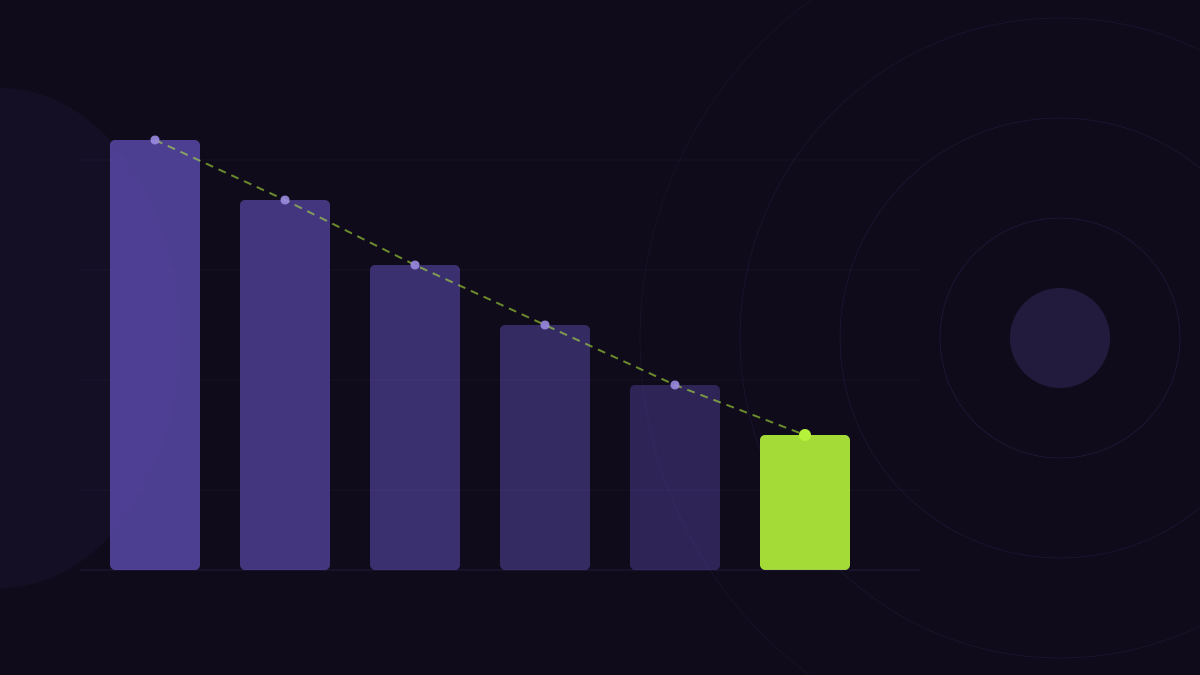
We have this conversation more often than you’d think. A founder comes to us braced for the same pitch they’ve had from two agencies before us: numbers on a screen, a case for spending more, a bigger retainer waiting at the end of it. So when we tell them to pause their paid social spend for four weeks and watch what happens to organic sales, they wait for the catch. There isn’t one. Nine times out of ten, organic sales keep steady, because the ads were paying for customers who were already going to buy.
It’s not one channel on its own, and it’s not the whole picture either. Sometimes it’s an email flow still running the same offer it launched with two years ago, generating opens but few sales. Sometimes it’s a paid search account nobody has touched since the person who built it left the business. The specifics change. The shape of the problem doesn’t: money moving out of the account each month with nobody checking whether it should still be there.
The conflict most agencies won’t admit to
That finding turns up more often than you’d expect. Most agencies are paid on a percentage of ad spend or on the size of a retainer, so recommending less spend works against their own interests. Tell a client to scale back, and you’re telling yourself to earn less this month. Nobody sets out to build a business on that conflict, but it sits there anyway, built into the pricing model before a single strategy call happens. An account manager paid on spend has no reason to flag a channel that isn’t earning its place, and every reason to suggest testing a new one instead.
It gets harder to admit as budgets tighten. Through 2025 and into this year, ad costs have kept climbing while SME marketing budgets haven’t, and every pound spent now has to answer for itself in a way it didn’t three years ago. That’s the climate where an agency under pressure to justify its own fee has the least reason to say that the answer this quarter might actually be less activity, not more.
How we priced ourselves out of it
Every retainer here is a flat monthly fee, whatever the channel and whatever the budget behind it, so scaling a client’s spend up or down changes nothing about what we earn. It sounds like a small detail, but it changes the whole shape of the advice you get. Once there’s no upside to recommending more, the advice reflects what’s working rather than what pays best.
That structure carries through into every partnership we run. Each retainer includes a quarterly check-in built for this purpose, a point where we look at what’s working, what isn’t, and say so honestly. Sometimes that means recommending a client add a channel. More often it means confirming that what’s already running deserves the budget it’s getting, or admitting that it doesn’t.
What “spend less” actually looks like
The pattern shows up again and again in the work itself. A brand paying for a channel nobody has reviewed in over a year, still running because it ran last year and nobody questioned it since. A founder keeping paid social alive out of habit, because switching it off feels like giving something up even when the results say otherwise. A channel that looks strong on its own report but is taking credit for sales the brand would have made anyway through search or direct traffic, so the real return sits well below what the dashboard claims.
Attribution makes this harder to see than it should be. A brand can watch a channel’s own dashboard climb every month and never notice that overall revenue isn’t moving at the same pace, because nobody has connected the two. We spend a good part of every audit doing that reconciliation, because a channel that looks healthy in isolation can still be a net cost once you account for what it’s replacing rather than adding.
None of this is unusual, and it isn’t only us saying so. Research from the UK firm Proxima has found that up to 60% of SME marketing budgets get lost to poor planning and weak execution rather than to the channels themselves. Separate UK surveys back this up: most SME decision-makers are running their marketing with no clear plan and no consistent way of measuring what’s working. If that sounds close to home, you’re not doing a poor job of managing your marketing. You’re managing it the way most businesses your size are set up to, without enough distance from the inside to see it.
What honesty costs us
Saying spend less only works if the business saying it can afford the sentence. A consultancy paid to sell hours has no room for that answer, whatever the founder in front of them needs to hear. We built things the other way round: a fixed fee for the full audit rather than a spend-based one, flat retainers rather than commission, and a review point built into every partnership where the honest recommendation might be to do less. That’s the conversation we’d rather have with you before we ever ask for a penny more.