
Prime Day moved to June this year, landing in the middle of a World Cup summer, and UK shoppers spent more across the event than in any previous year. Most eCommerce brands had no part in it. No discount code, no spike in their own dashboard, nothing to point to on the day. That absence is worth more attention than the headline growth figure, because the real question is what a spending spike this size tells you about how your own customers behave when a big, well-marketed reason to buy shows up.
Prime Day pulled forward a lot of spending UK shoppers would otherwise have made later
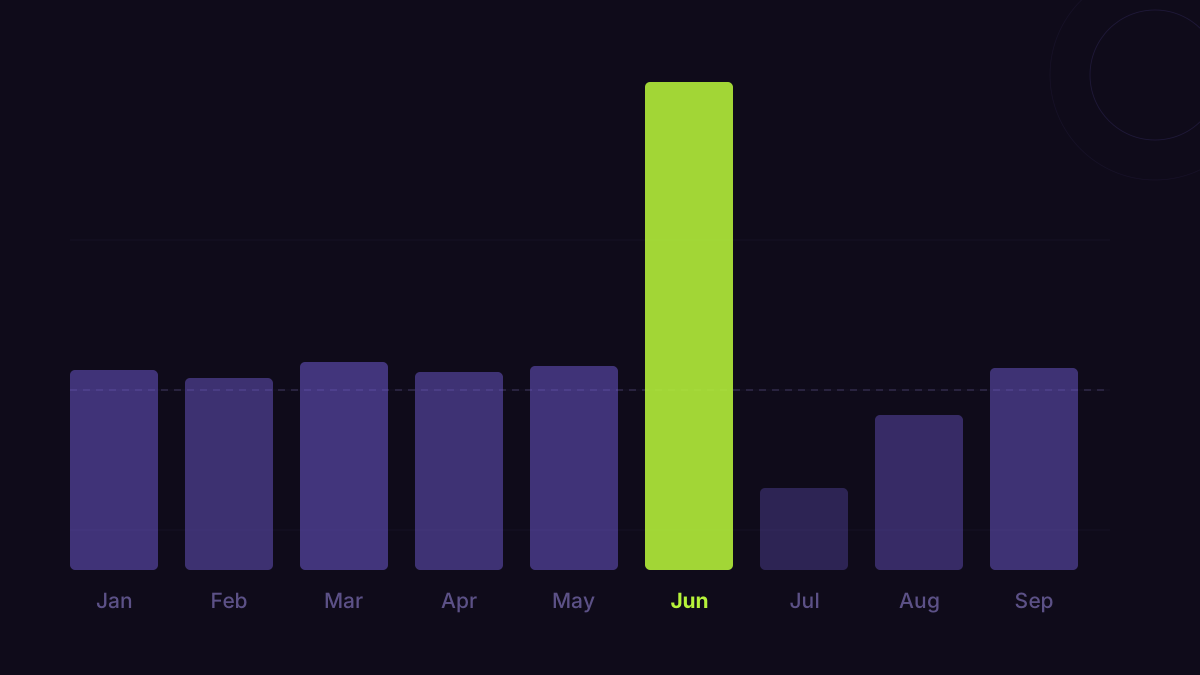
UK shoppers were forecast to spend £2.24 billion across Prime Day 2026, up 7.9% on 2025, and total online spend across June reached £10.39 billion, up 14.3% year on year, a rise Adobe attributed above all to the event’s move from July into June. That second figure matters more than the first. A single event doesn’t create a 14% jump in a month’s spending out of nothing; it borrows it from the weeks that follow. Money a shopper would have spent in early July on the same product, at a smaller discount or none at all, got spent in June instead, because the deal arrived first. For anyone planning budget around July and August, that’s not a footnote. A slower start to July isn’t proof that demand has dropped. It might be a sign that some of it already happened.
The categories that spiked tell you something about intent, not just discounting
What sold tells you more than how much sold. Adobe’s UK figures pointed to strong growth in home decor, up around 55% against the daily average, alongside electronics discounted by as much as 15%, both tied to a summer heavy on house moves and renovations. These aren’t impulse categories. Nobody buys a sofa or upgrades a home cinema setup on a whim because a banner appeared. These are considered purchases that shoppers had already been thinking about, sitting on, waiting for the right moment to commit to, and the discount pressure of Prime Day gave them a reason to commit now rather than later. That’s a different pattern from a flash sale on cheap, disposable stock, and it’s worth working out which one describes your own customers. If what you sell is the kind of thing people research, compare, and wait for the right moment to buy, a discount event like this can pull your customers’ attention away for a few days even if they never open Amazon’s app. If what you sell is habitual or low-consideration, the effect on you is smaller than the headlines suggest.
Not being on Amazon doesn’t mean the event didn’t affect you
The honest answer is that it depends, and treating every brand the same way is its own kind of hype. Attention shifts during a period like this, because Amazon puts real weight behind making sure shoppers are thinking about deals that week, and other retailers run promotions of their own to avoid losing ground altogether, which raises the general level of discounting noise across the whole market. For a brand selling something close to what was on offer, that can mean a real short-term dip, a few days where customers who’d buy from you in an ordinary week go looking for a better price elsewhere first. For a brand selling something distinct, a service, a niche product, something with no obvious Amazon equivalent, the effect is often close to negligible, whatever the coverage implies. The mistake is assuming the answer without checking, in either direction. Some brands need real thought about how they respond to a moment like this. Others are spending energy worrying about an event that left their customers almost untouched.
The more useful question is what your own spend data shows
Reacting to Amazon’s calendar is the wrong instinct either way, whether that means worrying about a dip or trying to run a copycat sale next June. The better move is understanding your own customers’ buying rhythm well enough to know whether a spike like this moved anything for you at all, and whether your spend across the year is positioned around your customers’ actual pattern rather than a generic retail calendar borrowed from bigger brands.
That starts with checking whether your current spend is earning its place in the first instance, since a brand that can’t say with confidence whether last month’s marketing worked has no real way of judging whether a one-off event like Prime Day mattered either. It also means being honest about which channel does the heaviest lifting for your business, because a brand leaning on paid search responds to a discounting event in a different way than one built on email and repeat purchase, and knowing which one you are changes what’s worth watching for going into autumn.
A retail calendar built around Amazon’s dates isn’t a strategy, and reacting to it after the fact isn’t either. A proper look at your own numbers, not Amazon’s, is the useful next step.